
Blueberries are the fruits of a shrub that belong to the heath family whose other members include the cranberry and bilberry as well as the azalea and rhododendron. I'd say that the avocado is the the queen of fruits, and blueberries are the king.
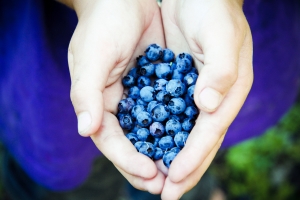
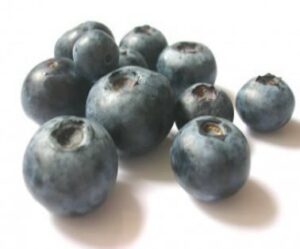 The health benefits of Blueberries are quite well known. Blueberries are the fruits of a shrub that belong to the heath family whose other members include the cranberry and bilberry as well as the azalea and rhododendron. I’d say that the avocado is the the queen of fruits, and blueberries are the king. Blueberries grow in small groups or clusters and range in size from that of a small pea right up to the size of a marble. They are blue to maroon and even purple-black in colour, and feature a white-gray waxy “bloom” that covers the berry’s surface and serves as a protective coating.
The skin surrounds a semi-transparent flesh that encases tiny seeds. Cultivated blueberries are typically mildly sweet, whereas those that grow in the wild have a more tart and tangy flavour.
Blueberries are native to North America where they grow throughout the woodland areas and mountainous regions in the United States and Canada. This fruit has only been recently introduced in Australia and is now widely cultivated in New Zealand. Blueberries were not really cultivated until the beginning of the 20th century, becoming commercially available in 1916.
There are approximately 30 different species of blueberries with different ones growing throughout various regions throughout the world. Several cultivars are now widely grown in New Zealand.
While blueberries played an important role in North American Indian food culture, they were not consumed in great amounts by colonists until the mid-19th century. It is interesting to note that this seems to be related to the fact that people from other countries did not appreciate the blueberry’s tart flavour, and only when sugar became more widely available as a sweetener at this time, did they become more popular.
Packed in this wonderful blue fruit is an amazing collection of antioxidants and nutrients. Its fantastic taste aside, the saying ‘good things come out of the blue’ really does apply to blueberries. Recent research has revealed that the blueberry really does have some quite amazing health building properties. It appears the blue pigment, anthocyanin, is the major contributor to its high antioxidant levels.
Blueberries are nature’s antioxidant powerhouse and contain higher antioxidant levels than just about every other fruit and vegetable known. Antioxidants prevent cell damage that occurs from everyday wear and tear. It is believed a diet high in antioxidants helps avoid such health problems as cancers and heart disease.
Fresh or frozen, blueberries have very levels of antioxidants, which combat the damage done by inflammation.
These incredible blue fruits contain significant amounts of anthocyanadins, antioxidant compounds that give blue, purple and red colors to fruits and vegetables. Anthocyanins may have anti-diabetic effects as well.
New research suggests that blueberries might even protect the heart muscle from damage, Research has found that blueberries deliver 38% more anthocyanins of than red wine. Blueberries are also a good source of vitamin E, which has numerous positive effects on the heart and circulation.
another phytochemical that has been shown to prevent cell damage. Ellagic acid blocks metabolic pathways that can lead to cancer. In a study of over 1,200 elderly people, those who ate the most strawberries (another berry that contains ellagic acid) were three times less likely to develop cancer than those who ate few or no strawberries at all.
and both soluble and insoluble fibre like pectin.
Blueberries are high in the soluble fibre called pectin, which has been shown to lower cholesterol and to prevent bile acid from being transformed into a potentially cancer-causing form, leading to bowel cancer.
A study published in the Archives of Ophthalmology indicates that eating 3 or more servings of fruit per day may lower your risk of age-related macular degeneration (ARMD), the primary cause of vision loss in older adults, by 36%, compared to persons who consume less than 1.5 servings of fruit daily.
Extracts of bilberry, a cousin of blueberry, have been shown in numerous studies to improve night 1time visual acuity and promote quicker adjustment to darkness and faster restoration of visual acuity after exposure to glare. This research was conducted to evaluate claims of bilberry’s beneficial effects on night vision made by British Air Force pilots during World War II who regularly consumed bilberry preserves before their night missions.
Laboratory studies show that phenolic compounds in blueberries can inhibit colon cancer cell proliferation and induce apoptosis (programmed cell death). Extracts of the blueberry phenols were separated into phenolic acids, tannins, flavonols, and anthocyanins. Flavonol and tannin fractions cut cell proliferation in half at concentrations of 70-100 and 50-100 microg/mL, while the phenolic fraction was also effective, but less potent, reducing proliferation by half at concentrations of 1000 microg/mL.
Blueberries promote urinary tract health, because they contain the same compounds found in cranberries that help prevent or eliminate urinary tract infections. In order for bacteria to infect, they must first adhere to the mucosal lining of the urethra and bladder. Components found in cranberry and blueberry juice reduce the ability of E. coli, the bacteria that is the most common cause of urinary tract infections, to adhere, thus preventing infections.
Among their rich supply of phytonutrients, blueberries include a flavonoid called kaempferol. The Nurses Health Study (involving 66,940 women) between 1984 and 2002 revealed that women whose diets provided the most kaempferol had a 40% reduction in risk of ovarian cancer, compared to women eating the least kaempferol-rich foods. The foods richest in kaempferol include plain tea, onions, leeks, spinach, and broccoli.
several leading scientists suggest eating half a cup of blueberries a day to protect and even promote brain function. In laboratory animal studies, researchers have found that blueberries help protect the brain from oxidative stress and may reduce the effects of age-related conditions such as Alzheimer’s disease or dementia. Researchers found that diets rich in blueberries significantly improved both the learning capacity and motor skills of ageing animals, making them mentally equivalent to much younger ones.
The ORAC Rating was created by researchers for the USDA at Tufts University in Boston, Massachusetts. You may or may not have probably heard about “ORAC”, but what does it mean? This well-used acronym is short for Oxygen Radical Absorbance Capacity.
Scientists developed this new laboratory test to measure the oxygen radical absorption capacity of different foods and natural substances. It is now one of the most sensitive and reliable methods for measuring antioxidant capacity.
This test measures the time it takes for the antioxidant to inhibit free radicals. It also measures the scale or degree of the free radical inhibition.
This test is one of the most popular tests being used today to rank the antioxidant potential of foods. Recent USDA research and testing has listed blueberries as number one when this test was used to study popular fruits.
Blueberries are highest in antioxidant capacity per serving, compared with more than 20 other fruits. (Source: Journal of Agricultural and Food Chemistry, 52:4026-4037, 2004)
The study showed that a one-cup serving of blueberries had higher antioxidant capacity than a serving of other popular fruits such as cranberries, strawberries, prunes, and raspberries.
This recent research by the USDA is the most comprehensive study and uses the Oxygen Radical Absorbance Capacity test because it is the most advanced way to study the power of antioxidants in various foods and substances.
Oxalates (ethanedioate) are chemical compounds that are found naturally in certain plants. If you suffer from kidney stones you may be sensitive or reacting to the oxalates found in oxalate rich plants such as spinach, rhubarb, Swiss chard (silverbeet), berries (all), quinoa, chocolate, cocoa, black tea, soy products, parsley and leeks. If you have kidney stones or are missing a portion of your intestinal tract or simply have trouble with digesting fats (because of gallbladder dysfunction), then you may need to follow a low oxalate diet.
Blueberries are among a small number of foods that contain measurable amounts of oxalic acid, a naturally-occurring substances found in plants, animals, and human beings. Oxalates can cause some concerns with people who have kidney or gallbladder problems, and these acids can even crystallise in some parts of the body. I generally advise patients with already existing ( or untreated) kidney or gallbladder problems to reduce or even avoid oxalate containing foods for some time.
Not really, laboratory studies have shown that oxalates may potentially interfere with the absorption of calcium from the body. Yet in several peer-reviewed research studies I have seen, the ability of oxalates to lower calcium absorption is exceedingly small and definitely does not outweigh the ability of oxalate-containing foods to contribute significantly enough to calcium loss from your healthy diet.
If your digestive system is healthy, you have no yeast or bacterial infection or dysbiosis or gut fermentation and you do a good job of chewing and relaxing while you enjoy your meals, then you will get significant benefits, including the absorption of calcium from calcium-rich foods plant foods that also contain oxalic acid. Don’t worry!